


Why Black Lung is Rising Among Young Workers in China — Not Just in Coal
Updated: Aug 13, 2025

Before Xu Jie entered the countertop cutting industry at 19, he never imagined that black lung disease, a lifelong, incurable occupational illness, would grip him — and even so quickly, within just eight years of working.
"No one tells you that you will get occupational diseases in the decoration industry. Factories clear up cases right away, even when they appear, and you don't even know how." The young migrant worker from Sichuan told the NGO Love Save Pneumoconiosis, after being diagnosed with pneumoconiosis in 2022.
Black lung disease, or pneumoconiosis, is traditionally recognized as “old miners’ disease” or “coal workers’ disease”. But now, it is commonly found among young Chinese workers in emerging industries like stone carving, home improvement and denture manufacturing.
Love Save Pneumoconiosis, a non-profit organization that has dedicated over a decade to treating China’s 6 million rural migrant workers affected by lung issues, was the first to discover that millennial migrant workers in the industries mentioned above are increasingly vulnerable to the irreversible disease that could lead to lung cancer.
In their 2024 study, backed by four years of field research, the group discovered that compared to coal workers who develop pneumoconiosis after retirement, patients in their 20s and 30s tend to develop the same symptoms within 2-3 years of working, and the disease progresses more aggressively. Since their work history is shorter, black lung issues hit harder on their finance status, family relationship, and their kids' future.
It’s been 15 years since the last time pneumoconiosis came to public sight in China: in 2009, a worker Zhang Haichao took the initiative to “open his chest” in order to prove that he was indeed suffering from pneumoconiosis, sparking a national debate on “whether the system of identifying occupational diseases also required a thoracotomy for lung examination.
An Envy That Can’t Be Judged
Pneumoconiosis patients who worked as cleaners in the village told Shi Qiuli, a pneumoconiosis rehabilitation specialist, that they envied those who could still work in factories after getting the disease. The patients earned¥800 (about $150) per month as cleaners, but in the factory, they could earn thousands and the difference was whether they could support a family or not.
Shi knew that those patients diagnosed with “suspected pneumoconiosis” who then still returned to the mines or factories might find themselves unable to work within two years as their condition worsened.
But she couldn’t judge their envy. She couldn’t tell those who could still work, “You've got a lifelong, incurable disease, so stop working and go home to rest.”
Shi worked at the Rehabilitation Center of Love Save Pneumoconiosis in Sanchuan town, Henan Province, and was the only full-time employee at this rehabilitation center.
The rehabilitation center was a joint venture between Love Save Pneumoconiosis and the local government. In 2021, when the construction of rehabilitation stations for pneumoconiosis began nationwide, Sanchuan Town, a high-incidence area for the disease, also set up a rehabilitation center in cooperation with the government. After the government joined, the room allocated to the rehabilitation center by the township health center was expanded from 40 square feet to 200 square feet. Besides a part-time rehabilitation doctor in the rehabilitation center, there were supposed to be several staff from the local government, but Shi had never met them.
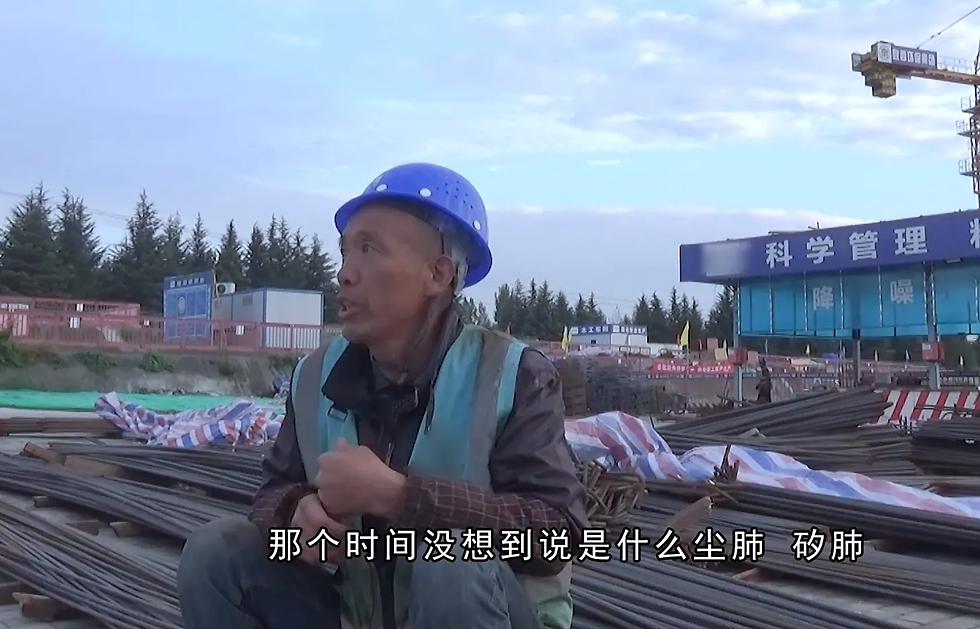
There were 650 “suspected” pneumoconiosis cases in the town, mostly coal miners in their fifties and sixties, who were considered the “victims” of the era of rampant small coal mining. Their next generation — normally younger migrant workers with no high school diploma — were either still in the mines or have switched to welding, many of whom also showed signs of pneumoconiosis.

In 2016, Wang Keqin, the founder of Love Save Pneumoconiosis, received the first request from a 23-year-old pneumoconiotic who was applying for a 10,000 yuan (approximately $1,400) medical treatment grant.
After 2020, more than a dozen young patients would apply for help every year, including in many in their early twenties.
But pneumoconiosis shouldn’t have been affecting workers this young. The average age of migrant workers with pneumoconiosis patients among migrant workers is around 58, with more than 19 years of exposure to dust, according to a survey by the Chinese Journal of Labor Health and Occupational Diseases, a leading Chinese magazine.
Why are so many workers developing pneumoconiosis in their 20s?
These young workers, often from villages and towns in central and western China, worked in indoor home decoration or emerging manufacturing industries such as stone carving, denture manufacturing, countertop cutting, and plumbing — jobs that are commonly perceived as "much safer than coal mining, without risks."
They often joined their fathers, older brothers, or friends in factories before the age of 15. Usually, they’d spent 2-3 years in unpaid apprenticeship, which meant that they'd acquired other vocational skills and were unable to leave the industry altogether, even when they became ill.
But these dusty jobs are also the closest to pneumoconiosis.
“The goals of pneumoconiosis treatment for pneumoconiosis are: to alleviate the suffering of patients, to slow down the progression of the disease, to improve the quality of life and social participation, to increase the survival benefit, and to prolong patients' life span,” the Expert Consensus on Pneumoconiosis (2024) states.
The onset of pneumoconiosis is also gradual: early symptoms typically include a persistent cough and wheezing. The cough will be uncontrollable, and patients will have difficulty in eating, rapidly lose weight, and experience a loss of mobility. This is followed by respiratory decline, complete loss of bodily functions, and reliance on oxygen machines to sustain life until death.
Around 2020, Zhong Xinmei, a researcher with Love Save Pneumoconiosis, and her team members discovered that 26 young pneumoconiosis patients were concentrated in Bahe Town, Xishui County, Hubei Province, where most of them were employed in the quartz cutting industry. The majority of the villagers there, including the last generation, were in the same industry.
In the research by Love Save Pneumoconiosis, three young pneumoconiosis patients had brothers or fathers who were diagnosed around the same time. Over 80% of patients reported having at least one relative suffering from pneumoconiosis.
The plight of young patients is also similar to that of the previous generation: lack of knowledge of the danger, no protection, and high likelihood of misdiagnosis.
“Normal Respiratory Diseases”
Before entering the quartz cutting industry, young workers had never heard that their occupation could invite pneumoconiosis.
Quartz cutting generates a significant amount of dust. Relatively safe practices are spraying water or chemicals on the slabs before work, and wearing a dust mask and other occupational health protective equipment.
But for tens of thousands of workers in small renovation studios, the only precaution is disposable masks. Some are not even willing to wear masks.
The development of the industry in the last decade has made the job increasingly dangerous.
Around 2012, quartz stone began to rise in popularity. With its exquisite color, resistance to wear, and easy maintenance, quartz quickly found favor in the interior renovation market, replacing traditional artificial marble as the material of choice. Young renovation workers also enter the industry at this time.
“The good thing about artificial stone is that the effect on the lungs is slightly slower, so some people live to 70 or 80 years old, which is normal.” A sick worker said in the research.
The main component of the dust in artificial quartz stone is silica, which can cause silicosis, a more severe form of pulmonary fibrosis. The disease progresses very rapidly, often reaching fatal harm in a few years. The new generation of pneumoconiosis patients therefore develops the disease after 5-6 years of exposure to dust and has progressed to stage three by the time they are diagnosed.
Similarly, in the stone carving industry, due to large-scale environmental protection rectification efforts in the 16-17 years, factories will be operating in a closed environment, and workers will have to inhale a larger amount of dust, increasing the chance of illness exponentially. Previously, most stone carving workshops were open-air, with a shed providing shelter for the workers. Now, to comply with environmental requirements, workers should work in closed rooms to prevent dust from leaking into the air.
But most companies have never upgraded workers' protective equipment. Last year, the manager of a Queyang-based carving company told Yanzhao Metropolis Daily that Quyang carving enterprises were often asked to suspend operations due to the “above” inspection. They also wanted to standardize the business, but the environmental protection equipment was a big cost. In Quyang, there are thousands of stone carving enterprises that can not afford ecological investment.
The initial symptoms of pneumoconiosis are similar to those of tuberculosis, so some patients are misdiagnosed as having “normal respiratory diseases”.
Most of the 20- to 30-year-old patients are “suspected cases”, not because their symptoms are too mild to identify, but because to receive a diagnosis of pneumoconiosis, the patient needs to obtain employment certificates issued by their companies. The identification of occupational diseases usually takes 6 months to a year, and involves multiple visits for diagnosis, with a significant risk of being left undiagnosed.
Most workers in this high-turnover profession do not sign labor contracts with their companies, which prevents them from obtaining a certificate from the company at the beginning.
Only 13 have received an occupational disease diagnosis out of the 650 patients in Sanchuan Town.

“Making a diagnosis of an occupational disease carries liability,” Shi Qiuli explained the doctors' concerns - what if the workers took their diagnosis and demanded compensation from the company? Would doctors be implicated?
When Xu, the 27-year-old countertop cutting worker, sought a diagnosis of occupational disease, the doctor said to him bluntly, "I know you have pneumoconiosis, but to print out the report is another matter, because you didn’t get the company's certificate."
In the end, the young migrant worker did not get a written diagnosis of pneumoconiosis, and his report gave the conclusion “suspected pneumoconiosis.”
Xu died in July of last year.
“I wish there could be no information gap so that people in the industry would know what pneumoconiosis is, where it comes from, and how to protect themselves.” Before his death, Xu told the volunteers of Love Save Pneumoconiosis.


Comments