


Shout Out, Wild Yak
The film Mountain Patrol: Kekexili and the documentary Balance once brought this high plateau to millions of viewers: snowstorms, gunfire, the carcasses of Tibetan antelope, and some men chasing after poachers through a wilderness almost entirely devoid of human life.
But every screen has its limits.
When the cameras stopped rolling, where did those patrolmen go? What became of them in the years that followed? Few people ever found out.
In a teahouse in Golmud, Xie Zhou, a former member of the patrol, sat with his family and talked for more than three hours. The tea was refilled again and again. When he came to the happier parts, he would stand up and imitate the way his old teammates walked, drunk, or fought with one another. When he spoke of the dead, he would sometimes stop mid-sentence, his voice catching in his throat.
Some stories sounded like jokes when he told them. Others dissolved into silence halfway through. And it was there—in the laughter, the pauses, the tears—that the history of the “Wild Yak Patrol” slowly came into view. In the steam rising from teacups, fragments of a past began to fit together again: a tragic, heroic chapter buried by time.

可可西里 Kekexili in the Twentieth Century
In its broad geographical sense, Kekexili stretches across Qinghai, Xinjiang, and Tibet, deep in the heart of the Qinghai-Tibetan Plateau. It is a vast country of glaciers, snow-covered mountains, and high-altitude lakes. Meltwater and groundwater weave through rivers such as the Chumaer and Tuotuo before flowing directly into the headwaters of the Yangtze. In that sense, Kekexili steadily feeds the source of the Yangtze, helping sustain the water supply on which the river’s middle and lower reaches depend.
Then money arrived, and the balance began to break.
Mining came first. In the 1980s, rich deposits of placer gold were discovered around the Malanshan and Weixueshan areas in northwestern Kekexili. Tens of thousands of prospectors poured into the region.
In the book Kekexili, the writer Chen Qiwen describes how some mining operations were controlled by bosses known as jinbatou 金把头—gold-mining bosses who used bribery and connections to obtain mining permits or simply buy themselves a passport. A common phrase of the time was “building bridges with bamboo chopsticks, paving roads with meat and liquor”: gifts and banquets could open doors that laws were meant to keep shut. The result was wholesale damage to stretches of plateau that had scarcely been touched by human beings.
Then there were the Tibetan antelope.

In the luxury markets of Europe and North America, the animal’s extraordinarily fine underfur had come to be known as “soft gold.” Shawls woven from it—shahtoosh—were marketed as the ultimate emblem of wealth and status. In the overseas black market, a single shawl could sell for several thousand dollars, sometimes more than ten thousand.
Tibetan antelope cannot readily be domesticated, and their wool cannot be collected without killing the animal. One shawl could therefore represent the deaths of three to five adult antelope. In little more than a decade, slaughter driven by the international trade reduced Kekexili’s Tibetan antelope population from over 200,000 to fewer than 20,000. The species was pushed toward the edge of extinction.
There was another kind of “soft gold” on the plateau: brine shrimp. These tiny crustaceans live in salt lakes and other high-altitude waters and form an important food source for waterbirds. Once dried, however, they also make excellent feed for farmed fish. At the height of the trade, prices reportedly reached 600,000 to 700,000 yuan a ton. Harvesting brine shrimp became widespread in Kekexili. It disrupted the plateau’s already fragile food chain, while harvesters frequently killed migratory birds and rare local wildlife as well, deepening the ecological crisis.

The Founding of the Western Working Committee
What many people do not realize is that some 45,000 square kilometres of one of China’s harshest and most remote landscapes were initially entrusted to the administration of an impoverished county, Zhiduo.
Zhiduo County and Golmud City are the two most important core areas linked to the ecological conservation and administrative division of the Kekexili region. Zhiduo County is the birthplace of Kekexili’s ecological conservation efforts and one of its primary administrative entities, while Golmud City serves as a vital hub of logistical support and long-term management.
In 1992, Sonam Dargye took the lead in establishing the Western Working Committee of Zhiduo County, Yushu, and became its first secretary.
In 1994, Secretary Sonam was killed in a gun battle with poachers. Snow and ice became his monument.
The following year, his brother-in-law Zhaba Dorje, then a member of the Standing Committee of the Yushu Prefecture People’s Congress, volunteered to take a demotion and succeed him as secretary of the Western Working Committee.

Before 1995, the mountain patrol consisted of only a handful of men. Zhaba Dorje understood that too few people cannot sustain the task of protecting the region. A military veteran himself, he recruited former comrades and opened enlistment to the public.
The result was the Wild Yak established, a patrol that would become known across the plateau. At its largest, the force numbered more than sixty men. The oldest, an elderly man named Riqiu, now deceased, was already in his sixties. The youngest, Zhaga, was only fifteen.
The “Western Working Committee” and the “Wild Yak Patrol” were, in practice, two names for the same group of people.
But most members of the Wild Yak held no formal government staffing status (bianzhi 编制). They were, technically, temporary hires. Even their wages depended heavily on money collected through fines and confiscations.
That arrangement would later cast a long shadow over what became of them.

Years on Patrol
There was never anything romantic about patrolling the mountains.
To enter the uninhabited interior was to endure cold, oxygen deprivation, and isolation for days or weeks at a time. If a vehicle broke down, rescue might not arrive for days. If food ran low, there was nothing to do but ration it. A blizzard could erase even the tire tracks that had brought them in.
This was not merely empty country. More dangerous than the weather, however, were the people. At any moment, the patrol could find itself confronting desperate criminals with little to lose.
For the entire team, the heavy weapons amounted to a Type 54 pistol, a Type 77 pistol, and two Type 81 rifles (after Zhaba applied several times, the team finally got a few more with approval of the authorities).

Many of the patrolmen came from herding families. Few had received much formal schooling. But, as Xie Zhou put it, they were “a clean-hearted bunch of young men.”
“When it came to catching people or chasing cars, they were excellent,” he said. “Once they were in the mountains, one man could do the work of several.”
In a city, the recklessness of youth might easily turn into trouble. Out there, in the immensity of the mountains, it became their sharpest weapon.
In May 1996, six patrolmen, Xie among them, were conducting inspections along the Qinghai-Tibet Highway. South of the Tuotuo River, near the former No. 84 work section, the six men stopped nine vehicles. There were guns hidden in the trunks.
I asked him whether they were afraid.
“Frankly speaking, the first time I went into the mountains, and the second time too, I was scared,” Xie said. “We had just started doing this. We didn’t really know what we were getting into. They had guns. You didn’t know whether they were going to shoot.”
“But later you understood something. If you were afraid of them, they would get on top of you. If you charged at them, sometimes they froze instead. So that was what we did. Almost every time, we went straight at them. And if somebody really got killed, then there was nothing you could do about it. In a place like that, you couldn’t hesitate.”
“Some of these men were hunting antelope. Some were digging for gold. Some were trafficking guns. Back then, some of them may genuinely have already killed people. They thought: if somebody dies out in the uninhabited parts of Kekexili, so what? The place is enormous. Someone could die there and nobody would ever know.”
Most memories of those years are bitter. But there was also a kind of uncompromising purity to them. In Balance, there is a shot of patrolmen driven half-mad by thirst. To conserve their supplies, they drop to their knees beside a muddy pool and drink straight from the ground.
One of the men in the frame is Jiangwen Tashi.

Many years later, Xie was talking about the old patrol during a livestream on Douyin (Chinese version of TikTok) when a comment suddenly appeared on the screen: “Do you know Jiangwen Tashi?”
“Of course I do,” Xie replied.
Another message appeared almost immediately.
“That’s my father. Could you tell me more about him?”
When Jiangwen Tashi was hospitalized in Xining after suffering a cerebral hemorrhage, the director of Balance, Peng Hui, went to see him with Xie.
The moment Tashi saw them, he recognized these old buddies. Overwhelmed with emotion, he reached out to shake their hands.
His brother later said, “When relatives and friends from the family came to see him, he couldn’t recognize them. But when you came, at first sight he knew exactly who you were.”

Jiangwen Tashi was one of twelve members of the Wild Yak who have passed away as known by Xie. Some died young after years of exhaustion and illness. Others died on the journey of patrolling.
Wugai was one of the youngest. He had only just reached adulthood.
After the patrolling routine finished one day, a traffic accident happened, where Wugai got badly injured. On the way to the hospital, Xie held Wugai in his arms and could feel the warmth slowly leaving the young man’s body. He had never felt the road could be that long. The boy he remembered as bright-eyed and full of life lay against his chest, barely able to speak, leaving his final words:
“Brother, I want some water.”
There was no glorious death on a battlefield, no grand gesture fit for legend. There was only pain—immediate and real. And there were the men who survived, left to carry the voices, faces, and memories of those who did not.
What helped these ordinary men endure the desolation was alcohol—and the ridiculous, smoke-and-fire comedy of life among themselves.
Even before he was married, Xie had a habit of leading a great procession of patrolmen into the small teahouse run by the woman who would become his wife. They ate and drank and, when they had had enough, sprawled out together and fell asleep wherever they could.
Once, just before a patrol was due to leave, one troublemaker Tsering Nyima disappeared. Everyone was frantic.
Apart from Secretary Zhaba, Xie was the senior figure the younger men feared most. He immediately suspected that Tsering Nyima had slipped away to drink.
Xie searched Golmud until, on Middle Qaidam Road, he spotted a figure swaying in the distance. He looked closer. Of course. It was exactly the drunk asshole.
“You’re the only one missing from the patrol,” Xie shouted at him. “You’re coming with me right now.”
Tsering could barely stand. Bottle in hand, he shook his head at Xie.
“I don’t want to go. I don’t want to patrol.”
Xie lost his temper, snatched away the bottle and hurled it to the ground. The bottle did not break. It landed upright.
Tsering Nyima stared at it, grabbed Xie by the arm and cried out: “Even God doesn’t want me to go!”
Anecdotes like this could be listed with dozens of pages.
There was one “intellectual” in the patrol. He spoke softly, could read and write, and ordinarily caused none of the trouble that men like Tsering Nyima did. But there is an old, coarse truth about alcohol: it lends courage to cowards.
One night, after drinking, something long suppressed seemed to catch fire inside the quiet “intellectual.” He slung a rifle over his shoulder and marched into Golmud’s notorious “Black Triangle,” a district known for sheltering fugitives, killers and men with reputations on the black market.
There, he fired into the black night sky and began cursing at the top of his lungs, demanding that the criminals come out and fight him one on one. Fortunately, before any of them could take him up on the offer, his bros dragged him away.
As Xie told these stories, he recreated every ridiculous expression and gesture with precision. Then he remembered the night Secretary Zhaba himself was caught drinking. Xie began laughing before he had even set the scene.
That evening, Zhaba and several patrolmen had hidden themselves in a lighted room. They had just raised their glasses when the door swung open. Xie was standing in the doorway.
“No drinking while on duty—that was his own rule,” Xie said. “I was furious. I thought: You made the rule yourself. How can you be the one breaking it?”
Xie turned to leave. The men inside hurried after him and tried to pull him back. Zhaba Dorje remained where he was. He didn’t make any excuse or any attempt to assert his authority as secretary. He simply gave Xie an embarrassed grin.
“Zhaba had a large belly. When he laughed, his belly shook with him.”
At this point in the story, Xie leaned backward and imitated the expression Zhaba used to make. He stretched his mouth into a smile and let his shoulders tremble.
We all laughed. Then the laughter faded. And suddenly Xie stopped talking. The curve of the smile remained on his lips, but his eyes passed over the teacups on the table and settled somewhere that did not exist.
For a moment, it was as if that little lighted room were still there. Zhaba Dorje was still sitting inside. The others had not scattered. They were only hiding, temporarily, somewhere in Xie Zhou’s memory, waiting for someone to call their names again.

Fading into the Dust
When the birds are gone, the good bow is put away. 飞鸟尽,良弓藏。
Zhaba Dorje died unexpectedly in 1998. Not long afterward, the Wild Yak was forced to disband. Xie opened a Langma Hall, singing-and-dancing club, in Golmud and managed to maintain a relatively comfortable life.
Many of his former teammates were not so fortunate. To call some of their lives destitute would not be an exaggeration.
Neimei Cairen has three children, and his wife has congenital heart disease. He himself was eventually given a temporary placement job that pays a little more than two thousand yuan a month. He works there during the day. In the afternoons, or whenever he has time, he takes construction jobs. The family now lives in a small room belonging to his workplace.
At least Neimei Cairen has a job.
Baima Wencai, one of the poorer former patrolmen, works on construction sites when work is available. When it is not, he goes out into the streets picking garbage.
Others are still living with injuries they suffered all those years ago. Dongzhu was once confronting poachers when they drove a vehicle over him three times, forward and backward. More than ten of his ribs were broken.
When Xie reached this part of the story, his brow tightened, raising a hand to his chest.
“Most people have two layers of bone protecting their organs, front and back,” he said. “Him?”
He held his fingers close together,
“Just this thin.”
Qika Renqin lost an eye. He could not afford a prosthetic eye, so a dog’s eye was placed in the socket instead. His body later developed a severe rejection reaction. Eventually, a volunteer friend helped him travel to Beijing for surgery.
For some of them, living proved harder than patrolling the mountains ever had. However brutal the road through Kekexili might have been, there had always been Secretary Zhaba at the front, cap on his head, hands clasped behind his back, leading the way. Behind him came the patrolmen with their rifles—laughing, joking, looking almost lazy, and yet following him without hesitation.
That image plays again and again in Xie Zhou’s mind. He has wondered what might have happened if Secretary Zhaba were still alive. If the Wild Yak had never been disbanded, perhaps these men would not have ended up where they are today. He would not call what he feels resentment. But neither has he ever quite been able to accept it.
Zhaba once explained why he had named the group the Wild Yak. Wild yaks, he said, were gentle creatures. They endured bitter cold. They worked without complaint. But once their territory was invaded, they would fight back with everything they had.
“He—Zhaba Dorje—was very straightforward,” Xie said with a sigh. “Too uncompromising.”
More than once, Zhaba had openly berated “bureaucrats” in front of camera. He said bluntly that he was not afraid of “those people.”
I had been curious about one incident involving a helicopter that Zhaba mentioned in the documentary, so I asked Xie about it. He gave a short, derisive sneer.
“That incident...”
To reconstruct the course of events as fully as possible, the following section is presented largely in dialogue, with occasional background notes added for context.
Xie Zhou: At the time, an American company was willing to donate a helicopter for Kekexili. They would cover the operating costs for the first year and send a professional pilot to train people from the Western Working Committee to operate it.
But when we submitted the proposal up the chain, someone said, “We don’t even have cars, and they want to ride around in a helicopter?”
Some people weren’t thinking about what conservation work actually required. Their attitude was more like: I’m the leader and even I’ve never been on a helicopter. Why should you get the chance?
In 1997, the Kekexili National Nature Reserve was formally approved. That same year, the Kekexili Nature Reserve Administrative Office was established under Yushu Prefecture, Qinghai. It was renamed the Kekexili Nature Reserve Administration in 1999. Today, it falls directly under the Sanjiangyuan National Park Administration, a Qinghai provincial government body jointly overseen by the National Forestry and Grassland Administration and the Qinghai provincial government. Zhaba Dorje’s two sons went on to work at the Kekexili Nature Reserve Administration. Xie says now many young staff at the administration do respect and acknowledge the contributions Wild Yak Patrol had made.
Kat: I want to ask a very direct question. Why did the government create another, supposedly official patrol force? That new team had little experience and, from what you described, didn’t do much of the actual fieldwork. Meanwhile, the people who really went into the mountains—in the words of Secretary Liang (who later took over Wild Yak Patrol) in the documentary—seemed to have been cast aside. Why did that happen? What explanation were you given at the time?
Xie Zhou: My own view now is that we had no connections and no one behind us. Some of the people who came into the reserve administration were the younger brothers of county leaders, or relatives of bureau directors. The Western Working Committee had actually done the work, but that didn’t necessarily mean people in the system thought much of us.
Kat: What happened afterward to the most powerful local officials, or to the people whose interests may have conflicted with Secretary Zhaba’s? Did you ever hear? Were they promoted?
Xie Zhou: The first head of the Kekexili administrative office had a good relationship with Secretary Zhaba. I believe the two of them had discussed how the Western Working Committee and the new administration might coordinate their work. Later, that director was transferred away, and Caiga was sent in.
When Caiga was younger, he had been implicated in a case involving the illegal arms trade. But somehow he didn’t go to prison. He had even once been expelled from the Chinese Communist Party, yet later he was still able to take a position at the Kekexili administration. If you ask me whether he had powerful protection behind him, I don’t believe for a second that he didn’t. Who exactly those protectors were is hard to say.
According to the interviewee’s words, Caiga was an unusual figure. He had previously been subject to disciplinary action, yet later rose step by step to a leadership position at the Kekexili administration. The precise path by which this happened remains unclear. To the former patrolmen, however, it did not look like an ordinary personnel appointment.
Kat: Why do you say that what Caiga did ran against the original purpose of environmental protection?
Xie Zhou: When Caiga was working at the Kekexili administration, he organized—or at least tolerated—people going into Kekexili to dig for gold and mine gold deposits.
Later, a group of journalists was preparing to enter the reserve to report from the field. Caiga knew there were people mining inside, so he told the guide to keep the journalists away from those areas. But the guide took the wrong route and ended up bringing them directly near one of the mining sites.
Caiga’s nephew was arranged at the administration. His monthly salary was less than five hundred yuan, yet within six months he was able to send six thousand yuan back home.
Caiga also established something like a donation channel—or at least a funding channel set up in his name—which was operated by relatives or people connected to him. Some funds belonging to the Kekexili administration became entangled with it as well. Publicly, he was promoted as the “guardian of Kekexili.” But at the same time, in my view, he was acting as a protector for certain businessmen.
There was publicity suggesting that, because of his work protecting Kekexili, the Tibetan antelope later became one of the images considered for the Beijing Olympic mascots. But some of the “conservation achievements” attributed to him were simply not true. For example, some Tibetan antelope pelts had already been confiscated by the Wild Yak Patrol and placed in storage. Later, Caiga took them back out and presented them publicly as pelts that his own people had seized from poachers.
There were people inside the Kekexili administration who couldn’t stand what he was doing. They wrote joint letters reporting his conduct. If I remember correctly, there were three letters.
Kat: So work that had originally been done by your patrol was repackaged as his own achievement?
Xie Zhou: That’s how I see it. He could call black white, and he could do it right in front of everyone.
Kat: What was Caiga’s attitude toward the Wild Yak Patrol at the time?
Xie Zhou: He told us that the two hundred thousand yuan allocated by the government had already been used to pay our wages. If we stayed on, he said, there was no guarantee there would be money for salaries later. But if we left immediately, they could give us an additional one thousand yuan for every year we had worked, on top of our wages. The meaning was obvious: they wanted us to go.
On the evening of his second day back in Yushu Prefecture after a work trip to Beijing in November 1998, Zhaba Dorje died at home from a close-range gunshot wound to the head inflicted by a Type 77 pistol. Following an investigation, public-security authorities ruled the death a suicide.
Kat: This is where the story becomes more sensitive. Even now, many people online are unwilling to believe that Secretary Zhaba killed himself. He had just returned from Beijing. He had recently appeared in major media outlets and had finally secured substantial sponsorship and funding. Then, suddenly, he was dead. A lot of people have found that very difficult to accept. How do you understand it happened?
Xie Zhou: Anyone who really knew Secretary Zhaba would hardly believe it. There were several things that seemed suspicious to us.
Normally, if someone kills himself with a gun, he shoots into his mouth, or aims at the temple or under the chin. But in his case, the bullet entered from low behind the ear. We found two bullet marks in the house—one in the wall, another in the ceiling. And the pistol wasn’t beside him. It had been thrown outside, beyond the windowsill.
In fact, when people first arrived, Secretary Zhaba was still alive. It seemed as though he wanted paper and a pen, as if he was trying to write something down, but there wasn’t enough time.
During his trip to Beijing, Zhaba Dorje had spoken sharply about the fact that governments at various levels in Yushu had for years failed to provide the Western Working Committee, or Wild Yak Patrol, with formal staffing status (bianzhi 编制) or stable funding, while at the same time spending substantial sums to establish new institutions such as the Kekexili Nature Reserve Administrative Office. He believed the Western Working Committee was being deliberately pushed aside and marginalized, and said that this left him feeling “somewhat aggrieved.”
Xie Zhou: While Secretary Zhaba was in Beijing promoting the protection of Kekexili, he visited the national forestry authorities and met senior officials at the national level. He was told that responsibility for coordinating and advancing the work of the Kekexili reserve could be entrusted to him. After he returned, he called relatives and friends and told them that certain things had finally been settled. But he had bypassed the local level and established direct contact with departments at the national level. And once you do that, some people locally would be unhappy for sure.
Kat: Meaning that normally he would have been expected to report upward through local authorities, but instead he went directly above them?
Xie Zhou: Exactly. If you bypass them and obtain support directly from higher up, some people are not going to like that. After Secretary Zhaba established the patrol, one of the things we lacked most was weapons. Without guns, you couldn’t go into the mountains and confront poachers.
Secretary Zhaba once went to a (Yushu) prefectural leader for help. That leader called the public-security office below him and said they should provide the Western Working Committee with guns. Later, when Secretary Zhaba went to the public-security office, the director there was furious.
He said, “If you wanted guns, why didn’t you come directly to me? Why did you go over my head and have people above me put pressure on me?”
The two of them started arguing in the office. They even drew their guns. That really was Secretary Zhaba’s character.
In 2000, authorities formally announced the dissolution of the Wild Yak Patrol. Patrolmen without official government positions lost their jobs. In 2001, eight members of the Wild Yak Patrol were arrested by the Golmud Municipal Procuratorate on suspicion of embezzlement for having, during a mountain patrol in 1998, sold 94 Tibetan antelope pelts they had confiscated without authorization and divided the proceeds among themselves. It was reported that the team members sold the pelts after working for six months without pay, with each receiving a share of over 4,000 yuan. But Zhaba Dorje had previously handled the matter internally by deducting the amounts from their monthly salaries.
Kat: I’ve heard that Secretary Zhaba also had a youngest son with Down syndrome. Does the local government provide him with any subsidy or assistance now? And some former patrolmen are clearly living in very difficult circumstances. Is there no government safety net for them either?
Xie Zhou: No. What the local authorities said this time was basically: if you want compensation, we can help put you on dibao低保 — the subsistence allowance. But dibao is something any citizen of the People’s Republic of China can apply for if they are poor and meet the eligibility requirements. It is not compensation for the historical contribution of the Wild Yak Patrol. Now they talk about dibao as though it were some special favor they are granting us, as though they are making an exception. That is very difficult to accept.
To put it harshly, Zhiduo County today barely dares to mention the Western Working Committee, much less the Wild Yak Patrol. They act as though these unresolved historical issues do not exist. Perhaps they think these men are already old. Some have died. If they drag things out long enough, eventually the problem will disappear on its own.
This place used to be really really poor. And yet it was during its poorest years that a group like this emerged and protected Kekexili. Isn’t that something worth being proud of? It should be a story in which everyone gains. Zhiduo County could take pride in its own history. The wrongs suffered by the Wild Yak patrolmen could finally be acknowledged. But in reality, it is as though no one sees them, as though no one hears them.
The Chinese television drama Born to Be Alive《生命树》, broadcast in 2026, drew on the experiences of the mountain patrolmen. According to people familiar with the production, filming itself encountered resistance from multiple quarters, and state-security personnel were at times present to observe the production. The protagonist, “Dorje,” combines the experiences of both Sonam Dargye and Zhaba Dorje. After the series aired, Kekexili and other ecological reserves returned to national attention. Many audiences also began seeking out the real people behind the story and asking what they could do to help them.
Kat: The series became extremely popular. I also heard that people began calling for donations. Did none of that money reach you?
Xie Zhou: After Born to Be Alive aired, some fans of the actors began making donations. Others saw posts I had put on Xiaohongshu and wanted to help us. They sympathized with what had happened to the former patrolmen and wanted to help. But some institutional accounts directed people to donate through them instead—for example, accounts associated with Sanjiangyuan National Park. Sanjiangyuan National Park Administration is a provincial institution, and it has funds directly assigned by the state.
We, on the other hand, have no formal status and no recognized organization. If we opened our own donation channel, it could easily be treated as illegal fundraising.
Xie Zhou also tried livestreaming on Douyin, where he shared stories from his years patrolling the mountains. Donations from viewers provided some income that he could use to help former patrolmen struggling to make ends meet. That avenue, too, was eventually closed. Xie says he was notified that he was no longer permitted to livestream.

The Current
Yang Xin, the founder of an environmental organization called Green River, raised money by selling copies of his book Soul of the Yangtze and went on to establish what is widely regarded as China’s first nongovernmental nature-protection station (this also mentioned in the documentary). At Zhaba’s suggestion, it was named the Sonam Dargye Nature Protection Station. The station later became one of the best-known stops along the route through Kekexili. The original structure has since been demolished and replaced, but the new station still carries Sonam Dargye’s name.
Today, Green River continues to operate stations and outposts in Golmud, Kunlun Spring, Sanjiangyuan and elsewhere, protecting the ecology of the Yangtze headwaters.

The lyric comes from Born to Be Alive. It sings of Secretary Sonam, and Secretary Zhaba, and every member of the Wild Yak Patrol. It belongs as much to the staff and volunteers who still hold their persistence at conservation stations across the plateau today. And to all those ordinary people whose names the public never learned, but who gave their time, their health and their passion to the work of protecting nature.
Yet measured against the enormous echo produced by a television drama, the Wild Yak Patrol’s own voice remains painfully faint.
I wrote this article not intending to raise the Wild Yak Patrol onto pedestal, or to turn its story into a distant legend in which the glory of one man is built on the bones of thousands. I just cannot let go of something much simpler.
When the Tibetan antelope are running again beneath the blue-green ridgelines of Kekexili, what about the ordinary men who bled and wept to make that possible, and who are now struggling to survive in the human world beyond the mountains?
Who, in the end, will restore the balance to their lives?
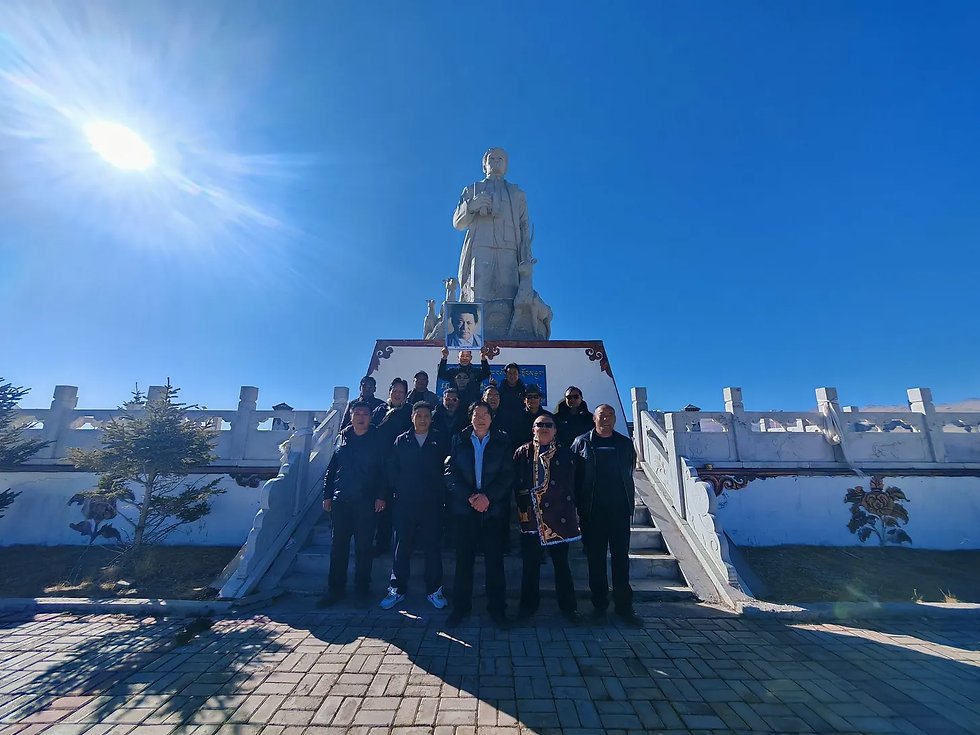
NOTE: The publication of the interview content has received consent from Xie Zhou and his family.


Comments