


Elephant Diet: the January 2026 Edition

Biyi’s Dish —
20 Years On: Why Are We Still Obsessed with the Bossy Boss/Alpha CEO? (20年了,为什么我们还在痴迷霸总?)
By Tencent Entertainment(腾讯娱乐)
The Bossy Boss/Alpha CEO (霸总) — that iconic character defined by wealth, dominance, and controlling charm — has been one of the most enduring archetypes in Chinese entertainment for the past two decades.
For many women in mainland China, their first encounter with this type of male lead was through the Taiwanese drama Meteor Garden. Its protagonist, Dao Ming Si, the heir to a top conglomerate, established the core framework of the “tyrannical + ultra-rich” persona.
By tracing the evolution of the Alpha CEO in Chinese film and television over the last 20 years, this article distills three core transformations of 霸总:
The character’s core has evolved from “dominant control” to “tender vulnerability.” The classic alpha male archetype, epitomized by domineering CEOs, is fading. Today’s popular versions, often appearing as secondary characters, gain appeal through a sense of “fragile masculinity”—they are restrained, respectful, yet emotionally vulnerable —a quality that resonates deeply with modern audiences.
The archetype has split across formats: softer in long-form, stronger in short-form series. A key divergence exists. In long-form dramas, these characters thrive as complex supporting roles with greater creative freedom. Conversely, traditional, over-the-top “alpha males” have found a booming home in short-form series (微短剧), where their exaggerated traits and use of “money solves everything” plots perfectly deliver the fast-paced, wish-fulfillment “high” that the format requires.
From local fantasy to global emotional escape. At its heart, the trope provides a safe outlet for fantasy. The core appeal lies in the ultimate contrast: a powerful, wealthy man devoted solely to the female lead. This fulfills a desire for being cherished while avoiding real-world power imbalances. In an uncertain era, this predictable, "low cognitive load, high emotional reward" narrative offers reliable comfort and stress relief across cultures.

Biyi’s Photo of the Month —

Joyce’s Dish —
Enduring a Winter Without Affordable Heating on the North China Plain (在华北平原上,熬一个用不起暖气的冬天)
By Phoenix Weekly (凤凰周刊)
Earlier this month, Beijing, once notorious for its haze, celebrated a “major victory” against air pollution, recording just one day of heavy smog in 2025—down over 98% since 2013.
The success of Beijing’s “blue sky defense war” villagers in the neighbouring provinces.

Since 2017, the central government has launched a major campaign to swap coal for natural gas for heating in Northern China’s rural areas, aiming to promote clean energy. In the early years, local governments provided ample subsidies to help villagers make the switch. However, with natural gas prices rising and subsidies from cash-strapped governments waning, low-income villagers are feeling the squeeze.
Phoenix Weekly visited nine villages in the North China Plain and uncovered the hidden “heating anxiety” creeping across this frozen landscape.
Taking Shijiazhuang, the capital of Hebei province, as an example, the daily gas costs for a household range from 63 to 94.5 yuan (USD$9-$13) just to maintain an indoor temperature of around 18 degrees Celsius. This adds up to a monthly heating bill of about 1,890 to 2,835 yuan (USD$271-$407), totaling around 7,560 to 11,340 yuan (USD$1084-$1626) during the winter.
Most are hesitant to shell out that kind of money. While on the ground, reporters saw a few elderly folks, leaning on their canes, slowly making their way to the yard to bask in the sun. One elderly woman noted that although her home has gas, she uses it only for cooking and relies on electric heaters for warmth at night, a strategy shared by many other seniors.
“We long for blue skies, but we also crave warmth,” a villager told the weekly magazine.
However, when these two needs clash, villagers are left to pay the price between the bills and the warmth.
Joyce’s Photo of the Month —

Lily’s Dish -
China's Metro Stations Transform Into Commercial Hubs, Reshaping the Urban Commute (从卖早餐到卖榴梿 ,地铁站快被爆改成商场B1层了)
By New Weekly (新周刊)
As the third-largest metro network in China, Guangzhou Metro has long offered limited shopping options within the paid area, typically a few convenience stores. This landscape began to change in September 2025 with the launch of its own supermarket chain, “Yoyo Select”, which has rolled out across multiple key stations.
The stores transformed the passenger experience by prominently displaying seasonal fruit alongside fresh bread and coffee. Stations evolves into integrated commercial hubs, offering services that cater to urban commuters’ everyday needs. Passengers can now pick up dinner ingredients on their way home without leaving the paid area — inspired, perhaps, by a cooking segment on the train’s onboard screens — grabbing soup stocks and fresh southern China fruit right after stepping off the subway.
This commercial shift is not unique to Guangzhou. Many other metro operators across China are also actively improving their extensive underground infrastructure.
In Wuhan, nearly 4,000 square meters of underground space at Hongshan Square Station was converted into a wet market in early 2024.
Chengdu’s stations have introduced chain stores like Lawson and Luckin Coffee to create underground retail blocks.
Shenzhen Metro emphasizes efficiency, deploying mobile breakfast carts at key exits, and even piloting the use of off-peak trains for parcel logistics.

This transformation is driven primarily by acute financial pressure. While China leads the world in metro track length, the systems are considerably expensive to build and operate. Among the 28 major city metros that disclosed 2024 financials, only Shanghai and Fuzhou reported profits after government subsidies. Faced with long investment recovery cycles, operators are compelled to look beyond transporting passengers.
Beyond the traditional transit-oriented development (TOD) model, integrating quick service directly into passengers’ commuting routes emerges as a critical strategy to create new revenue streams, which aligns perfectly with the shifting rhythms of urban life. The last thing many want after an evening rush-hour ride is an additional detour. Metro retail inserts itself precisely at this psychological juncture — the last convenient stop before home — by enabling commuters to efficiently combine daily errands with their journey.
Lily’s Photo of the Month —

Kat’s Dish —
By Portrait (人物)
In memory of the brave girl with pink hair, Zheng Linghua, who passed away on January 23, 2023—

It began in the summer of 2022, when Zheng Linghua graduated from Zhejiang Normal University and was admitted through recommendation to East China Normal University for her master’s degree. After dyeing her hair pink, she posted a photo online with her grandfather at his hospital bedside. Soon after, she became the target of sustained cyber violence that lasted for more than six months.
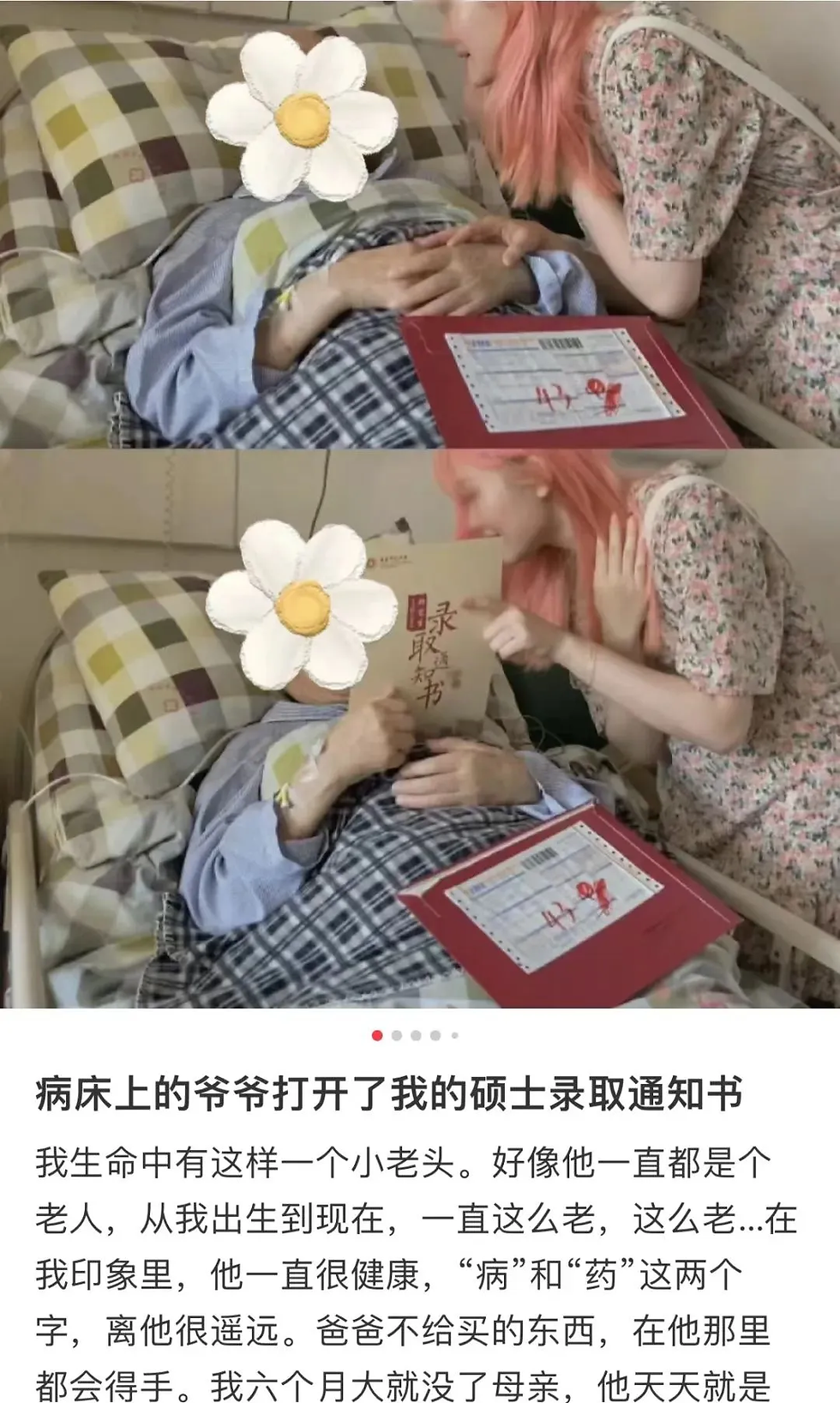
The attacks centered on accusations of “lack of professional ethics,” sexual insinuations, and alleged moral misconduct. Some accounts stole her photos to attract audiences, while others went as far as fabricating sexual rumors about her.
With the help of her lawyer, Jin Xiaohang, Zheng sought legal redress. She was met with multiple, harsh realities: the cost of preserving digital evidence was prohibitively high and quickly drained her savings; meanwhile, most abusive comments hovered at the edge of legality and did not meet the threshold for criminal charges.
In November 2022, while the case was still ongoing, her physical and mental health deteriorated sharply. She took a leave of absence from school, was hospitalized, and ultimately withdrew the lawsuit.
In January 2023, after a long struggle with depression, Zheng took her own life.
During the 2025 graduation season, a spontaneous phenomenon emerged on social media platforms: more and more young women appeared in graduation photos wearing academic gowns and sporting pink hair. In their posts, they repeatedly mentioned the same name, Zheng Linghua.
This report features five young women from diverse backgrounds, universities, and academic disciplines. Some dyed their hair entirely pink; others chose highlights or wore pink wigs. Among them were women who, after dyeing their hair pink, personally experienced online abuse themselves—and came to understand, in a visceral way, what Zheng Linghua had endured.
Their motivations varied, but they converged on a shared meaning:
To remember a peer who was crushed by online violence.
And to publicly affirm the right to self-expression—freedom over one’s appearance, bodily autonomy, and the refusal to let women be defined by a single, rigid system of judgment.
In the Chinese social context, pink hair is rarely seen as a neutral aesthetic choice. It is often loaded with moral labels: “improper,” “unprofessional,” “undisciplined.” Such scrutiny falls especially heavily on women—particularly those in roles deemed to require self-regulation, such as teachers, medical students, and graduate students.
What this story reveals is a structural conflict: on one side, a younger generation’s embrace of diversity, individuality, and bodily freedom; on the other, a still-dominant culture of moral policing, singular value systems, and collective online persecution.
In the end, pink hair became a form of resistance—quiet, but unwavering.
As the article puts it—
“Pink is neither a provocation nor a symbol. But when it is treated as a crime, remembering it becomes a response in itself.”
Kat’s Photo of the Month —

Hope you had a wonderful first month of 2026,
See you soon!
The Elephant Room team.
(*While the Elephant Room team carefully selects content from credible news outlets and media, we cannot independently verify every piece of information it contains. If you believe any material infringes on copyrights or contains factual errors, feel free to reach out to us so that it can be reviewed and, if necessary, removed🙏)


Comments